Missing teeth don’t just affect your appearance—they change how you eat, speak, and interact with the world. A dental bridge offers a proven solution to restore your smile and reclaim your quality of life. At Hawkes Dental in Litchfield, Michigan, we believe every patient deserves a tooth replacement option that looks natural, feels comfortable, and supports their long-term oral health.
Dr. Cody Hawkes has practiced dentistry since 2020 and brings an additional healthcare perspective through his previous experience as a registered nurse. This unique combination allows him to understand the deeper connection between your oral health and overall wellness. As a member of the Academy of Oral and Systemic Health and the Michigan Dental Association, Dr. Hawkes stays current with the latest evidence-based techniques.
We’re committed to providing dental treatment that doesn’t just restore teeth—it supports your whole-body health and prevents future complications.
What Are Dental Bridges?
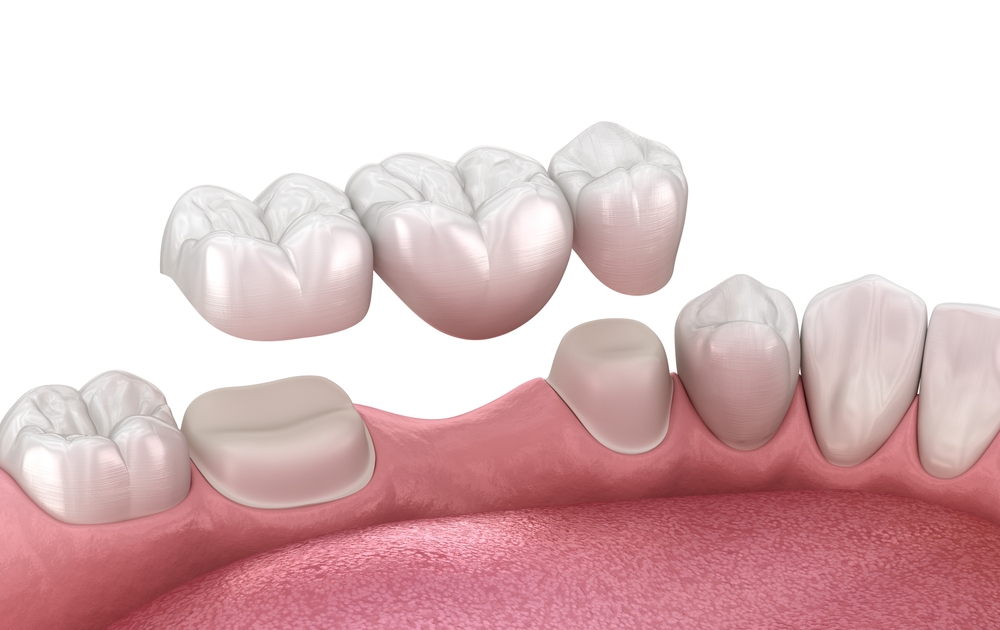
A dental bridge is a fixed restoration designed to replace one or more missing teeth and fill the space left behind. A traditional bridge typically uses crowns placed on healthy teeth on either side of the gap to support one or more artificial teeth, called pontics.
Because the restoration stays in place, a bridge can help restore your ability to chew comfortably, speak clearly, and smile with confidence.
Replacing missing teeth can also help maintain proper spacing by reducing the chance that neighboring teeth will gradually shift into the open area.
Why Choose a Dental Bridge?
Dental bridges offer a fixed solution for replacing one or more missing teeth. Depending on the type of bridge, the restoration may be supported by neighboring natural teeth or by dental implants.
Traditional tooth-supported bridges do not require implant surgery and may be an appropriate option for patients who have healthy teeth next to the open space.
A bridge can improve chewing and speaking while filling the visible gap in your smile. It can also help keep neighboring teeth from shifting out of position.
Unlike a removable partial denture, a fixed bridge stays in place, although cleaning underneath and around it requires some additional attention to help protect the supporting teeth and gums.
Preventing Hidden Health Consequences
At Hawkes Dental, we view missing teeth through a broader lens. Bone changes can occur in areas where teeth are missing because the jaw no longer receives stimulation from the natural tooth roots.
Our team uses advanced diagnostics, including our state-of-the-art Cone Beam CT scanner, to assess not just the visible gap but the underlying bone structure. We consider how tooth loss connects to systemic health—using salivary diagnostics and other integrative tools to ensure your restoration supports your total wellness.
Our Comprehensive Bridge Process
We’ll guide you through each stage of treatment so you know what to expect from start to finish.
Your bridge process may include:
-
Initial evaluation: Dr. Hawkes examines your teeth, gums, bite, and the area surrounding the missing tooth or teeth to determine whether a bridge is appropriate.
-
Treatment planning: We discuss your goals, review your tooth replacement options, and use diagnostic technology when needed to evaluate the supporting teeth and surrounding structures.
-
Preparing the supporting teeth: The teeth that will support the bridge are carefully prepared so the restoration can fit securely.
-
Taking detailed measurements: We gather the information needed to create a bridge that fits comfortably and works properly with your bite.
-
Placing your bridge: Once your restoration is ready, Dr. Hawkes checks the fit, bite, and comfort before securing it in place.
-
Ongoing care: Our team explains how to clean around your bridge and what you can do at home to help protect the restoration and supporting teeth.
Types of Dental Bridges
Not all bridges are the same. The right type depends on your unique oral health situation:
-
Traditional bridges are the most common, anchoring to natural teeth on both sides of the gap.
-
Cantilever bridges work when only one adjacent tooth is available for support.
-
Maryland bridges use a bonded framework ideal for front tooth replacement.
-
Implant-supported bridges use dental implants to provide additional support without relying on neighboring natural teeth.
Dr. Hawkes will evaluate your bone health, bite, and overall wellness to recommend the option best suited to your needs and long-term goals.
Caring for Your Dental Bridge
With proper care, a dental bridge can last 10 to 15 years or longer.
Here’s how to care for your dental bridge:
-
Daily brushing and flossing are essential—floss threaders or water flossers make it easier to clean beneath the pontic.
-
Avoiding hard or sticky foods helps protect the bridge and supporting teeth.
-
Regular visits to Hawkes Dental allow Dr. Hawkes to monitor your bridge, check your bite, and assess surrounding tissue health.
We’ll build a personalized hygiene routine around your restoration, including our Guided Biofilm Therapy cleaning system to keep your entire mouth in optimal condition.
Why Hawkes Dental for Your Dental Bridge?
Dr. Cody Hawkes brings a whole-health perspective to restorative dentistry through his previous experience as a registered nurse. He has practiced dentistry since 2020 and completes continuing education courses at least monthly to stay current with research, technology, and treatment techniques. He is also a Diplomate of the American Board of Dental Sleep Medicine and a member of the Michigan Dental Association, Academy of General Dentistry, American Academy of Dental Sleep Medicine, and Academy of Oral and Systemic Health.
At Hawkes Dental, that background supports a thoughtful approach to restoring missing teeth. Dr. Hawkes considers the condition of your remaining teeth, gums, bite, and surrounding structures when planning your bridge, while our team takes time to explain your options and long-term care needs. We also emphasize prevention and ongoing maintenance so your restoration becomes part of a broader plan for protecting your oral health.
Restore What’s Missing From Your Smile
A missing tooth can affect the way you eat, speak, and care for the rest of your smile. A dental bridge may provide a fixed solution that restores function while helping maintain proper spacing between your remaining teeth.
Contact Hawkes Dental at (517) 542-2357 to schedule a visit in Litchfield and find out whether a dental bridge is right for you.